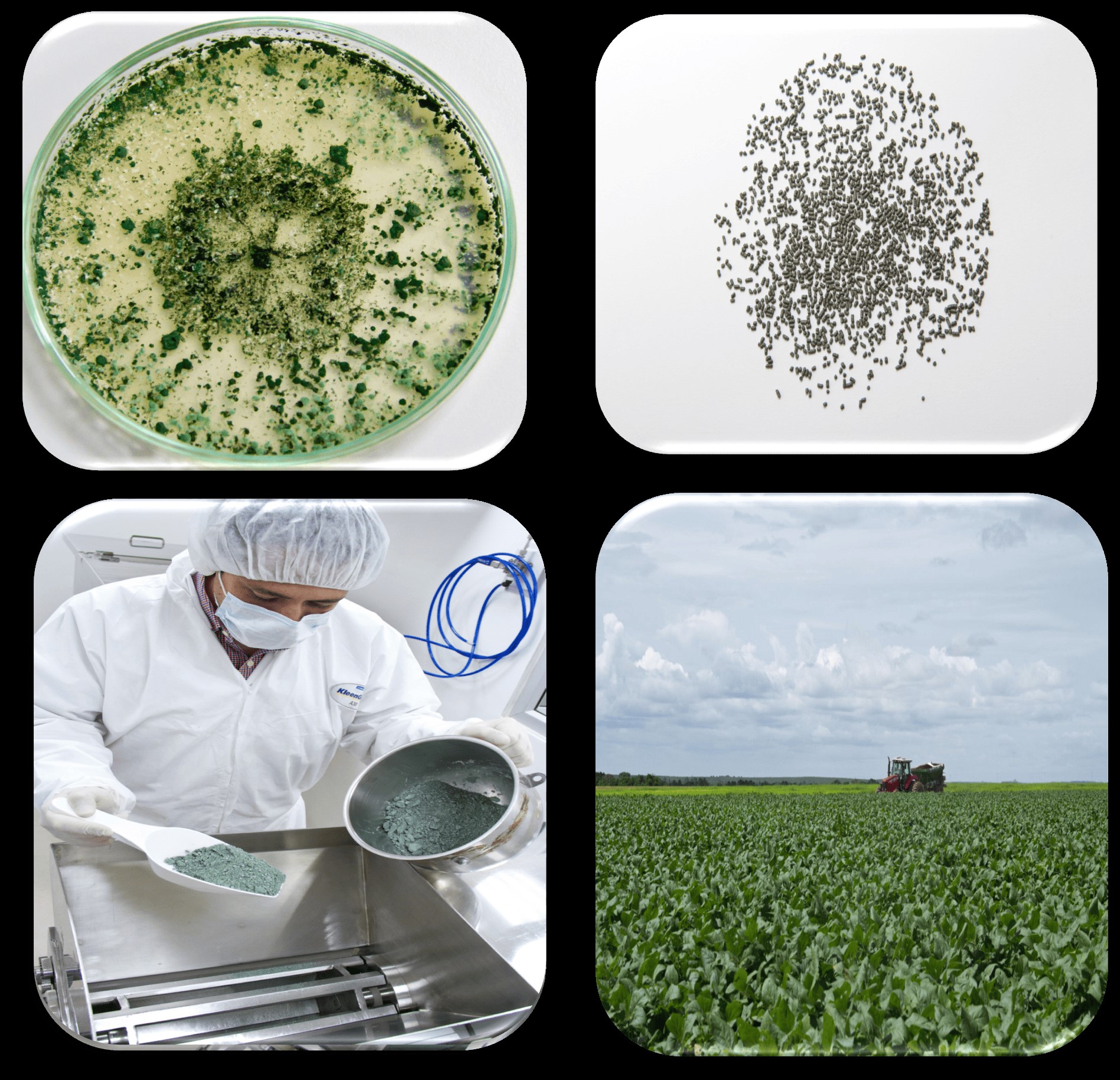
Biologicals are an excellent technological alternative for reducing the use of agrochemicals and their negative effects on health and the environment

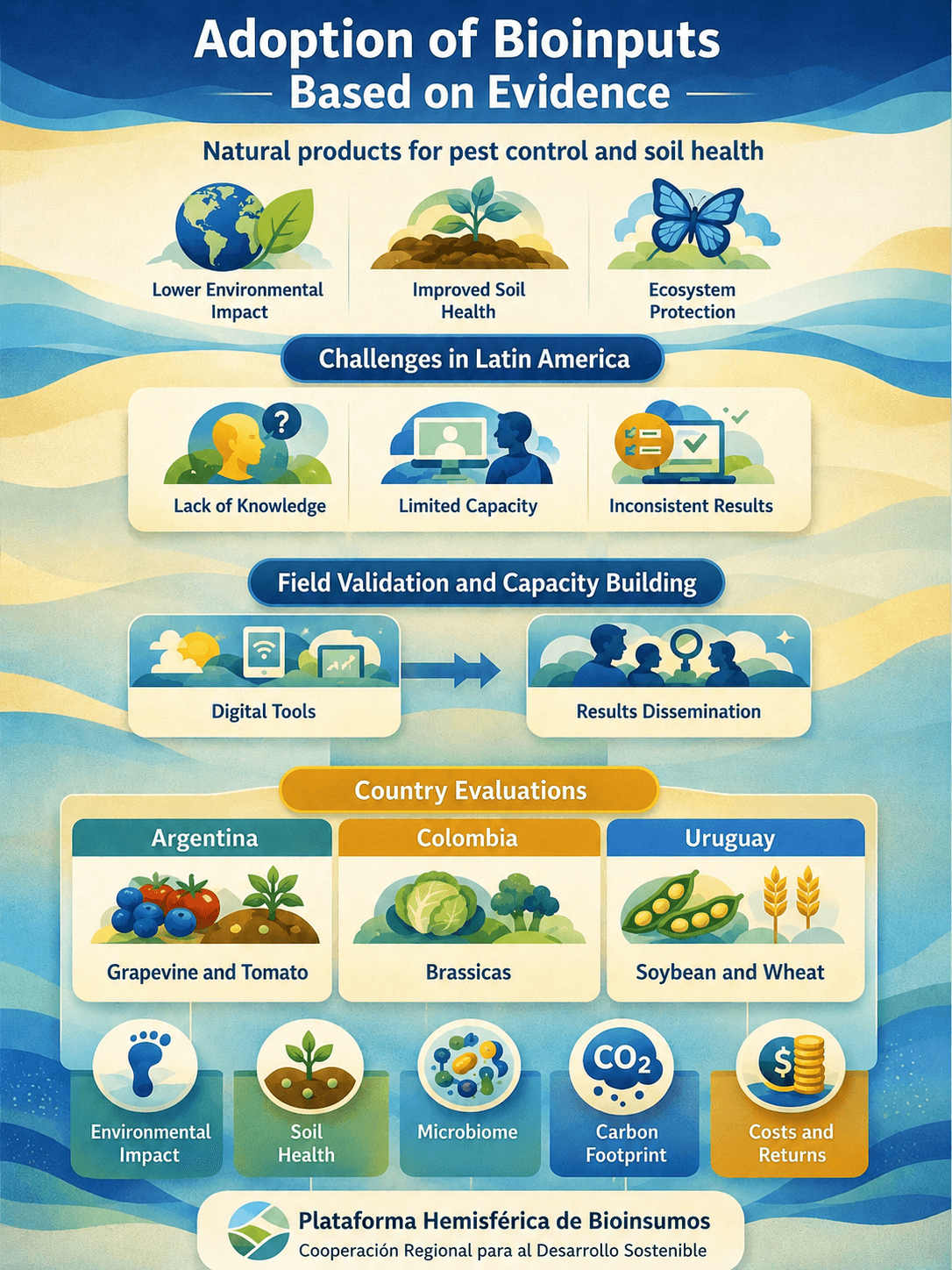
The intensive use of agrochemicals is degrading soil health and generating negative impacts on the environment and human health. As a sustainable alternative, biologicals are emerging, but their adoption in Latin America remains very limited. This is due to a lack of knowledge about their management, limited field-level scientific evidence, low availability, and insufficient dissemination of successful cases. This lack of information creates uncertainty among farmers, leading to resistance to change and discouraging their use. Therefore, it is essential to generate robust evidence demonstrating the effectiveness of biologicals to overcome these barriers and promote their adoption.
Advancing the adoption and sustainable use of biologicals through scientific evidence to transition toward resilient agrifood systems in Latin America.
The project aims to increase the adoption of biologicals in Argentina, Colombia, and Uruguay, member countries of the Hemispheric Bioinputs Platform (PHB). Through a partnership among IICA, INTA, AGROSAVIA, and INIA, the initiative will assess the continuous use of bioproducts by measuring productivity and environmental indicators under field conditions. The knowledge generated will be used to design and implement an interactive web-based learning module within the PHB. In addition, the project will promote technology transfer through in-person and virtual training, with the goal of empowering local communities, with particular emphasis on youth and women.

The solution is based on establishing demonstration plots in key production systems: crucifer crops in Colombia, grapevine and tomato in Argentina, and soybean and wheat in Uruguay. In these plots, conventional farmer practices will be compared with an integrated management program that incorporates quality-assured biologicals and reduces the use of chemical fertilizers and insecticides. Key indicators such as carbon footprint, environmental impact coefficient, microbial communities, and crop productivity will be measured. All this scientific evidence will be systematized and incorporated into a new PHB module featuring interactive tools, resource repositories, and networking capabilities. Finally, the solution includes outreach events and field days to transfer validated methodologies directly to producers.
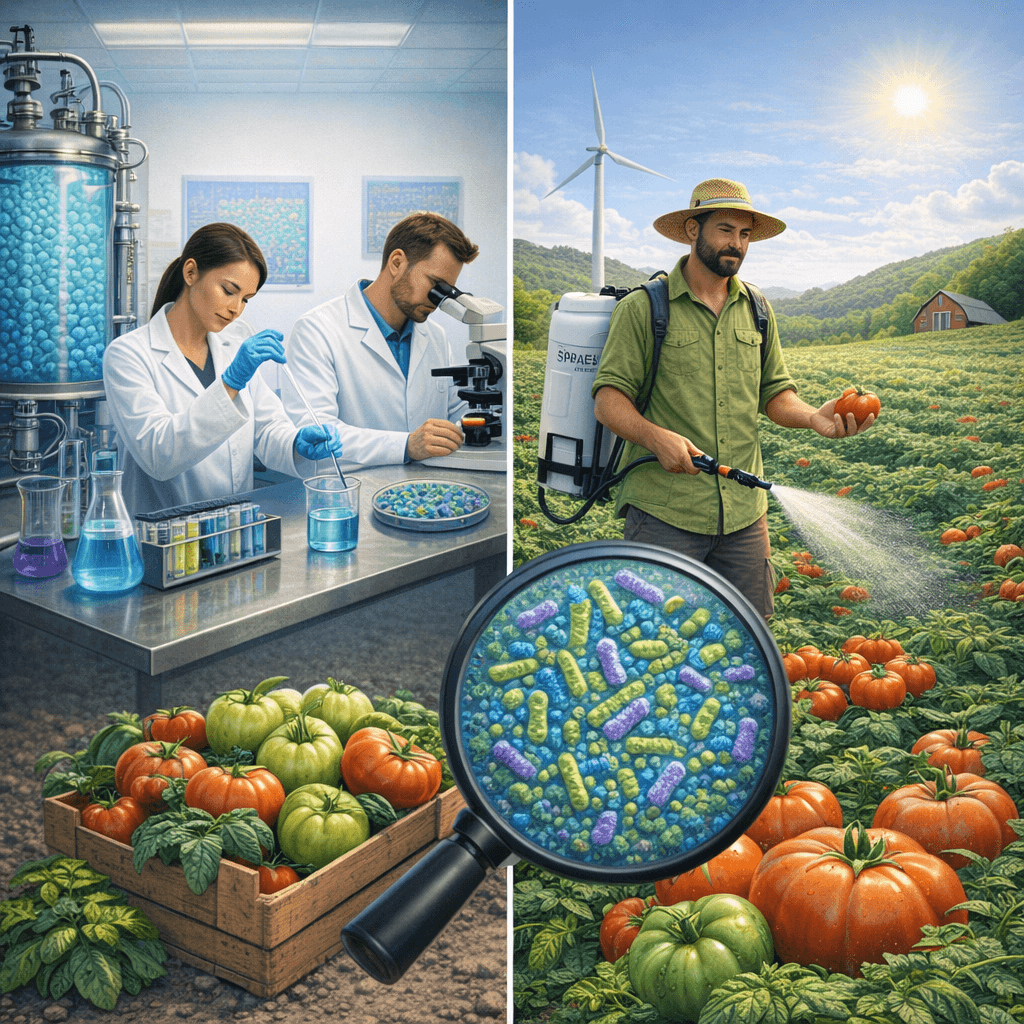
"If we are discussing investments in sustainable, resilient, and efficient agri-food systems, bio-inputs enable a transition from theory to practice".— Leandro Bullor, https://www.fao.org/americas/news/news-detail/bioinsumos-oportunidad-inversion/es.
 Integrated Pest ManagementResilient Crops and Carbon Neutrality (“PI-1”)AppliedCropsBio-inputs
Compared to the initial context of high dependence on agrochemicals and uncertainty, the project is expected to empirically demonstrate that the use of biologicals can reduce the need for synthetic fertilizers by up to 50% and lower application costs, while increasing crop yields by up to 20%. Environmentally, improvements in soil quality and a measurable reduction in carbon footprint will be achieved. In terms of capacity building, the information gap will be addressed by training at least 2,500 direct beneficiaries and 5,000 indirect beneficiaries (producers, technicians, and academia) through the PHB platform and extension activities. By transforming research into accessible evidence, resistance to change will be reduced, facilitating the large-scale adoption of biologicals and positioning the region toward carbon-neutral agriculture.







.jpg&w=828&q=75)
.jpg&w=828&q=75)

Sede Central
Colombia

Argentina
Uruguay
Argentina


 Impact
 Initiatives
 Dashboard
 Alliances
 Impact
 Initiatives
 Dashboard
 Alliances


.jpg&w=828&q=75)